Today
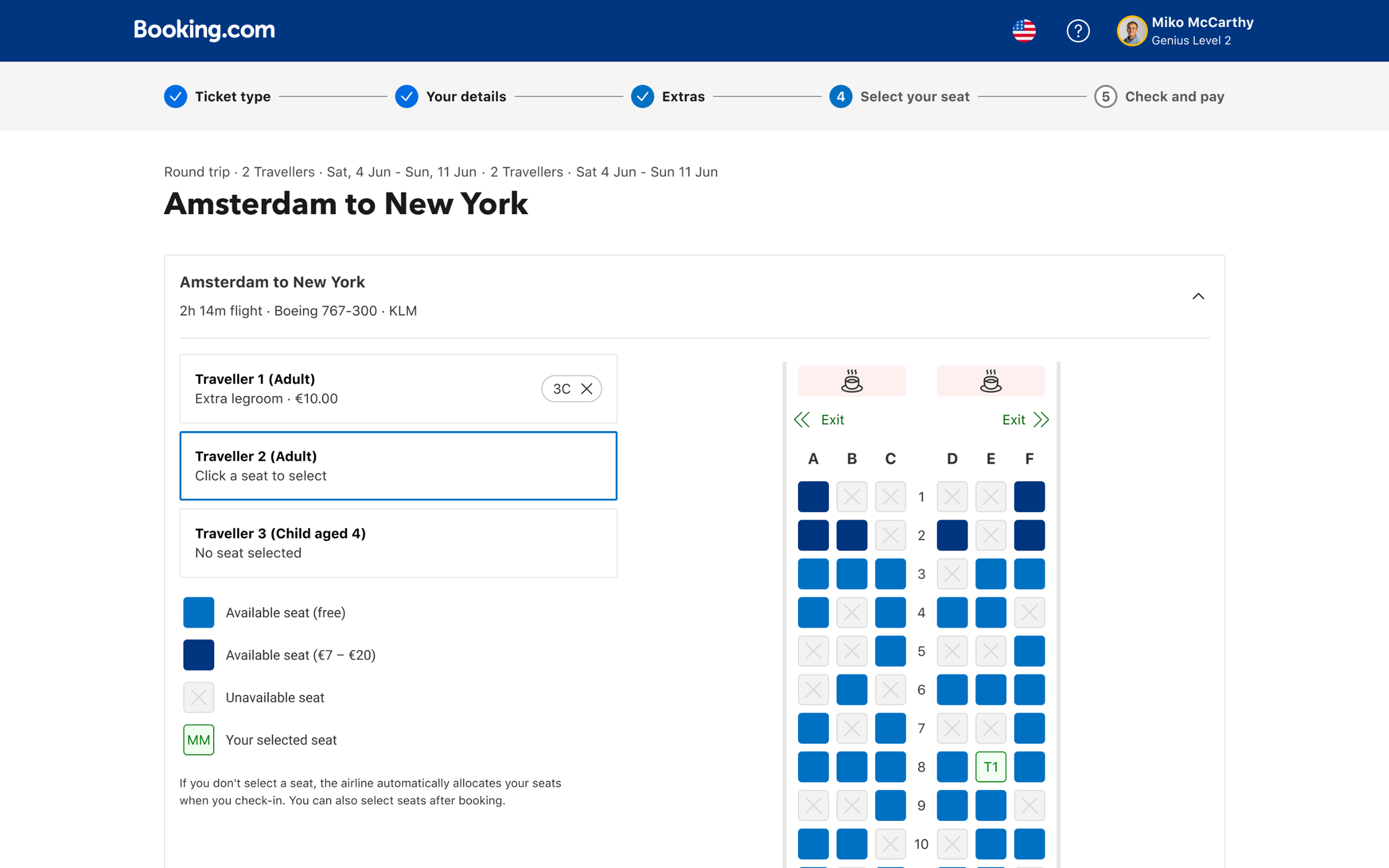
A price-tiered grid of identical squares.
Vision
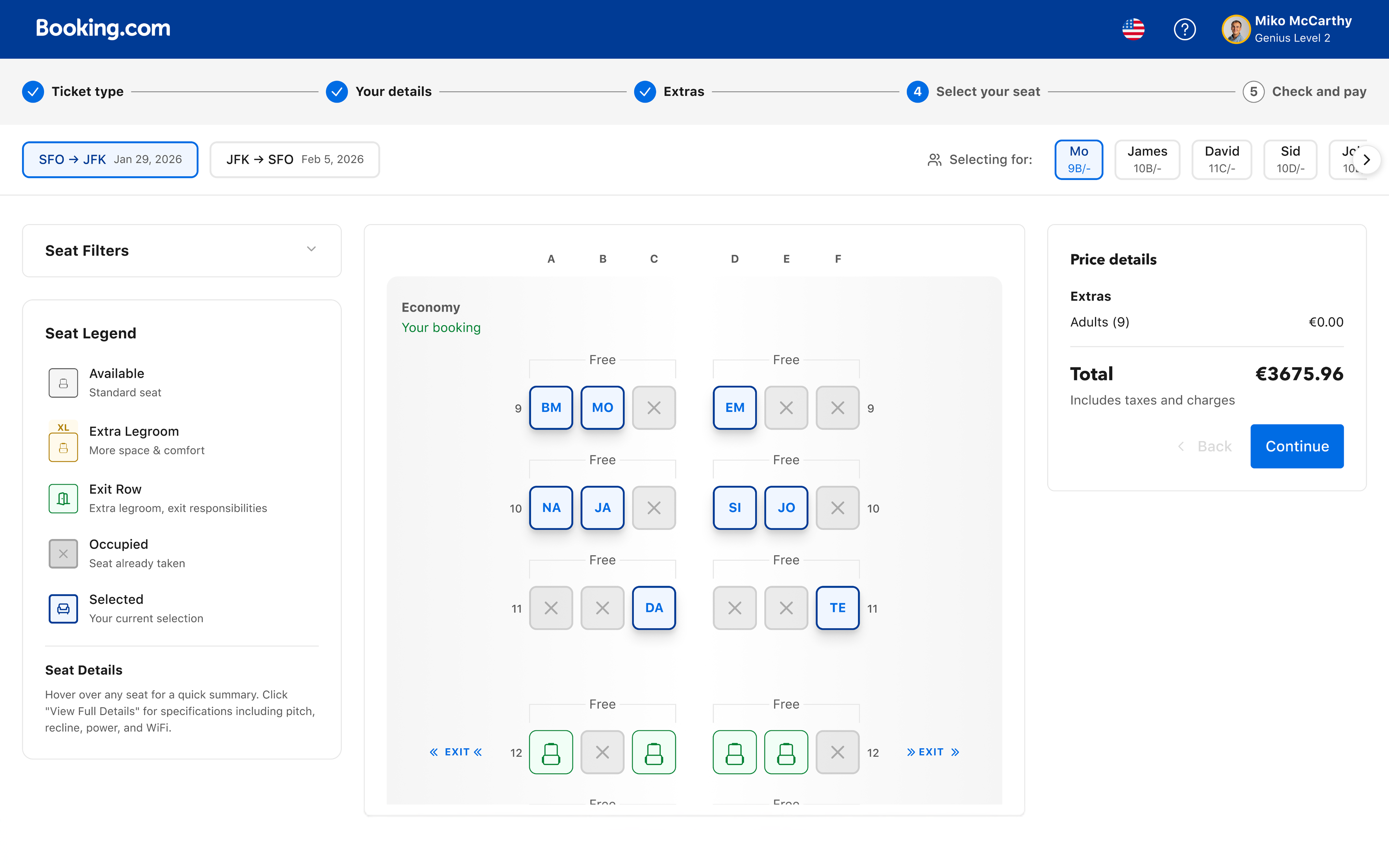
A value-led canvas with zones for context, control, and decision.
The 10-week vision sprint, in one flow
From a 78.3% no-selection signal to a leadership-approved 2026/27 direction. Diagnose → Research → Design → Land. Eight beats, four phases.
- M · 01 The signal Quest data: 78.3% no-selection. Hundreds of "buying blind", "no sense", "terribly aggravating".
- M · 02 The reframe Stop optimising click-counts. The category was wrong, not the conversion.
- M · 03 Tiers of Inspiration 26 brands, 3 tiers. Tesla, Ticketmaster, Trainline surfaced the breakthrough patterns.
- M · 04 Matrix of Chaos 13 paired audits across 4 platforms × 4 scenarios. Three uncovered cells, called by name.
- M · 05 Three pillars Architecture → Content → Personalisation, sequenced by dependency. The order is the argument.
- M · 06 Cohort flows Quick Start: Solo · Couple/Group · Family with kid. Same shell, three products.
- M · 07 Leadership review Approved by Flights leadership as the seat-selection direction for 2026/27.
- M · 08 Handed off 8 features shipped during the vision phase. Next 18 months executed by another designer.
01 / The thesis Booking.com sells seats price-led. The industry sells space value-led.
Most teams treat the seat selection problem as a conversion problem: better filters, clearer legend, sharper price tiers. It's not a conversion problem. It's a category-positioning problem. The 78.3% no-selection rate is the predictable result of asking customers to evaluate a row of identical squares against a price tier they don't understand.
The reframe runs through the entire case study. Every section underneath it (the two-methodology diagnosis, the three sequenced pillars, the cohort-targeted Quick Start flows, the dependency-honest roadmap) is proof of the same argument.
customers shown a seat map
free + paid combined
the gap that funds the work
leave their seat to chance
Quest user feedback through 2025-10 → 2026-02 sounded the same note across hundreds of comments: "complicated and opaque", "no sense", "very confusing", "buying blind", "terribly aggravating". Customers couldn't tell why one seat cost more than another. Couldn't find legroom info. Couldn't sit together. The category was wrong, not the conversion.
I paid a bunch of extra money, but can’t find out what seats have legroom.
It’s hard to tell the difference between premium seats
Auto Translated from ‘Japanese’ Show Original
Better filters & explanation of how/when to pick seats
We want to sit together. Cannot get any information about this.
The plane map was not clear and it was confusing to choose seats.
Explain what seats are the extra legroom seats
Booking seats is very complicated and opaque.
airplane layout All unformatted and difficult to read.
The seat selection process is confusing and terribly aggravating.
when we went to select our seats the layout of the plane made no sense. very confusing!
info on entertainment while on flight, the specific plane will offer different services, what are they? Do we bring our own head sets, etc. Also, when choosing seat— the window seats weren’t very clearly marked — i hope i chose correctly
02 / The diagnosis Two methodologies, run in parallel.
Most teams audit either externally (competitor scan) or internally (heuristic review). We ran both, structured, at the same time. The competitor study reframed what "good" looked like outside our bubble. The internal audit stress-tested where ours actually broke. Together they sized the gap.
Method 1 · Tiers of Inspiration
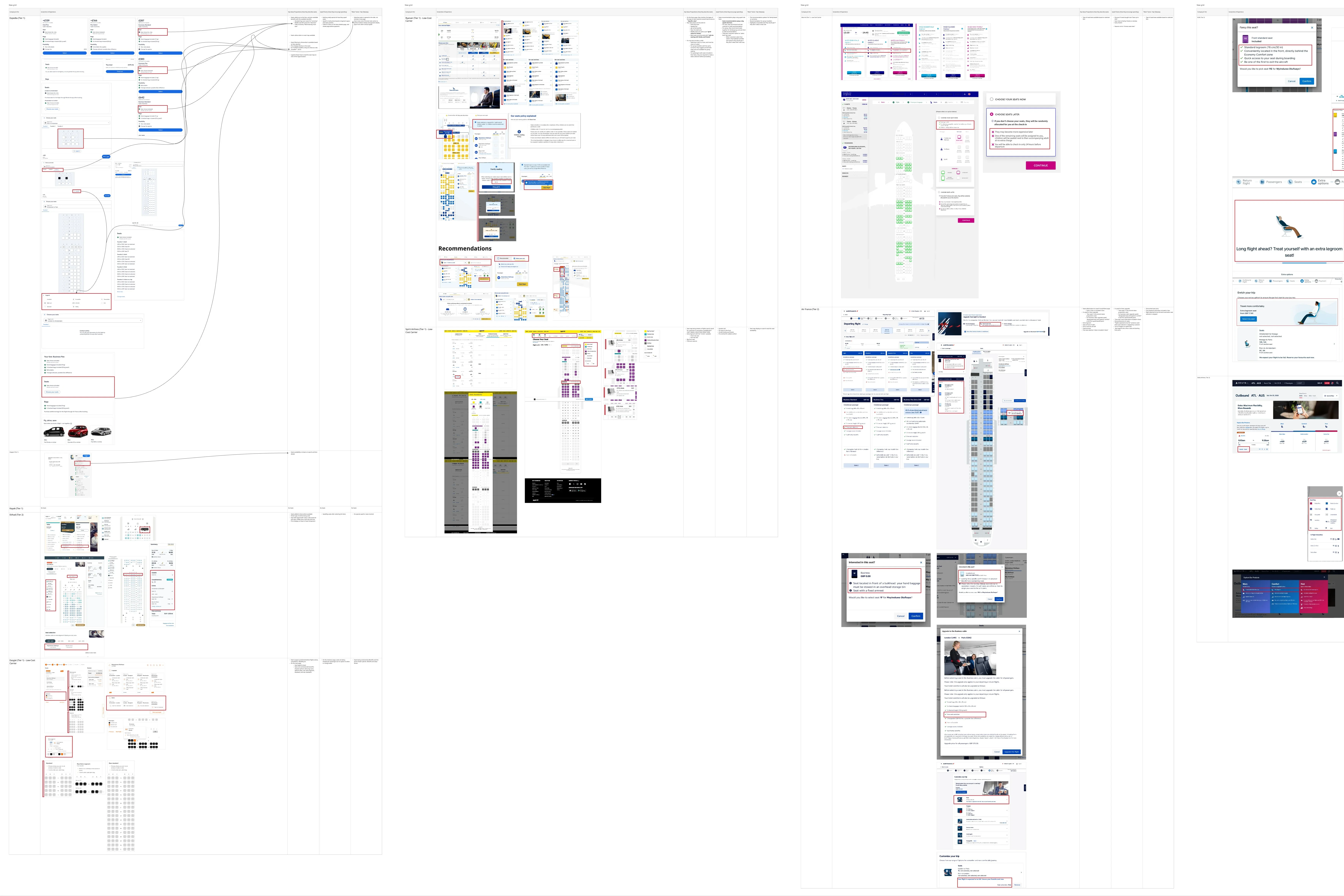
A three-tier competitive frame that forced us past direct competitors and into how other industries sell space. The tier-3 lookalikes (Tesla configurator, cinema seat pickers, Trainline coach selectors) are where the breakthrough patterns live.
Direct competitors
Baseline of our immediate market: OTAs and the LCCs who are masters of ancillary revenue.
 Expedia
 Hopper
 Kayak
Kayak Trips.com
 easyJet
 Jet2
Jet2 Ryanair
 Spirit
 Wizz Air
Ryanair · Role-based seating. Middle seat = "good value." Back seat = "safe with family." Personalised recommendations by traveller type.
Expedia · Contextual side panel. Seat selection opens in a drawer, keeping flight details visible. Context never lost.
Premium airlines & data providers
Best-in-class within travel: long-haul airlines and the data providers that feed them.
 Air France-KLM
 British Airways
 Cathay Pacific
 Delta
Delta Emirates
 Singapore
 United
 Virgin Atlantic
 SeatGuru
Singapore Airlines · 360° seat view. Immersive visualisation of seat location and surroundings. Replaces "buying blind" with visual proof.
United · Seat comparison tool. Side-by-side comparison of Main / Comfort / First with images and amenities. Real evaluation, not a price tier.
Delta & Spirit · Seat maps in search. View-only seat availability shown during flight search. Awareness before commitment.
Emirates · Clickable interactive legend. Click a legend entry, the seat map filters to only those seats. Legend becomes a control, not a key.
Out-of-industry breakthroughs
How other industries solve the fundamental problem of selling configurable space. The breakthrough patterns came from here.
 Odeon
Odeon Cineworld
 Royal Caribbean
 Ticketmaster
 Hilton
 National Express
 Trainline
 LNER
LNER Tesla
TeslaTier 3 didn't surface a specific competitor pattern to copy. It surfaced a methodology: cohort-targeted recommendations (cinemas, Ticketmaster), 360° visualisation (Tesla configurator), persistent context (Trainline coach selector). The vision pillars are the synthesis.
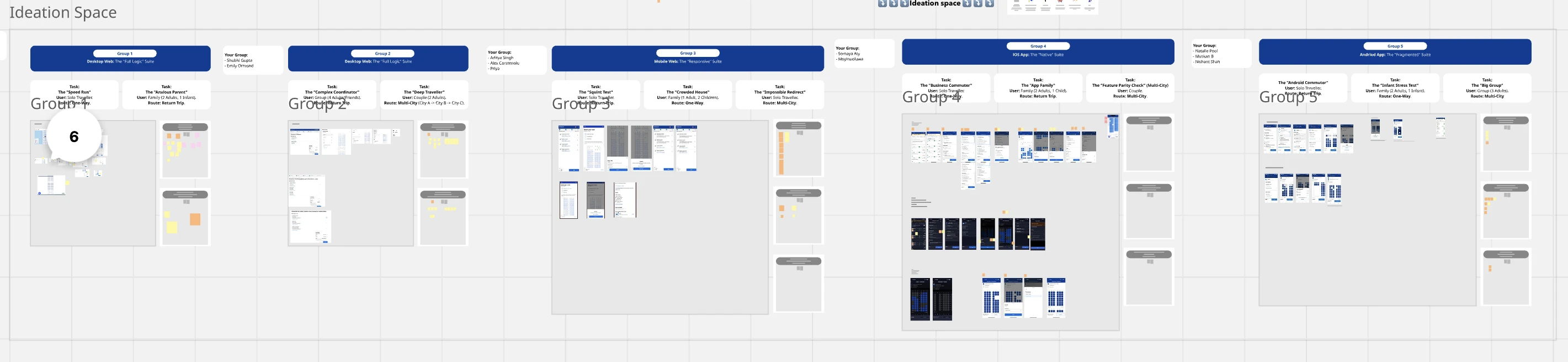
Method 2 · The Matrix of Chaos
A scenario-based audit grid: 4 platforms × 4 scenario archetypes. Thirteen pairs of designers ran specific "missions" (booking with an infant on Android, multi-city on mobile web, group of four on desktop), capturing screenshots, friction logs, and opportunity stickies. The visible empty cells are honest: three scenarios we couldn't cover.
03 / The system Three pillars, in order. The order is the argument.
The vision is not a list of features. It's three pillars sequenced by dependency: you can't personalise a broken layout, you can't enrich content without a canvas, you can't recommend without a data foundation. Architecture first. Content second. Personalisation third.
| Pillar | What it does | Horizon |
|---|---|---|
| P1 · Layout & Interaction Architecture | Make the canvas legible. Zoned IA, detailed legend, granular filters, NLP smart search. | H1 2026 |
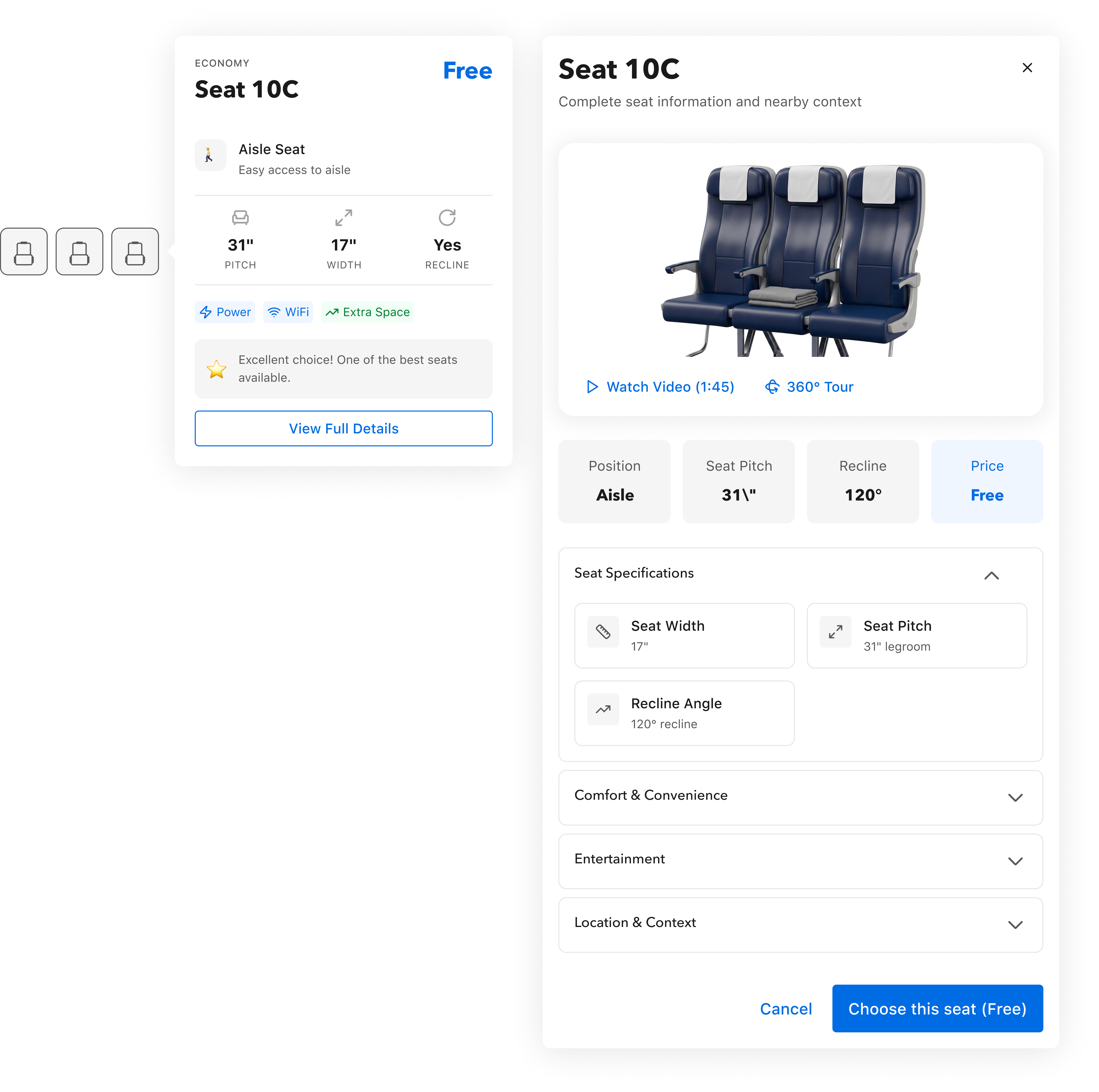
| P2 · Reinforce Value & Content | Replace “buying blind” with proof. Hover summary, full-detail modal with 360°, video, cabin context. | H1/H2 2026 · RouteHappy-gated |
| P3 · Personalisation & Cohort Selection | Recommend, don’t just filter. Quick Start concierge with cohort-targeted flows. | H2 2026 |
Pillar 1 · Layout & Interaction Architecture
Seat selection should be a value-driven experience that makes it easier to explore, compare, and select.
Three input modes layered on the same canvas: the Seat Legend highlights, the Seat Filters narrow, and NLP Search asks. Each fits a different user mode (scan-and-spot, methodical-shopper, just tell me what I want), and all three converge on the same map.


Pillar 2 · Reinforce Value & Content Enrichment
Seat selection should be enriched with the transparency and detail needed to justify the decision.
Pillar 3 · Personalisation & Cohort-Based Selection
The recommendation layer doesn't ask the same questions of every traveller. It uses the trip context the system already knows (passenger count, ages, route length) to change the question itself. The Quick Start concierge is the entry point. The cohort flows are what come next.
04 / The proof Three cohorts, three flows, one pattern.
The Quick Start concierge isn't a single experience. It branches into three cohort-targeted flows, each with its own justifications, its own value framing, its own success metric. This is the difference between a personalisation slogan and a personalisation strategy.
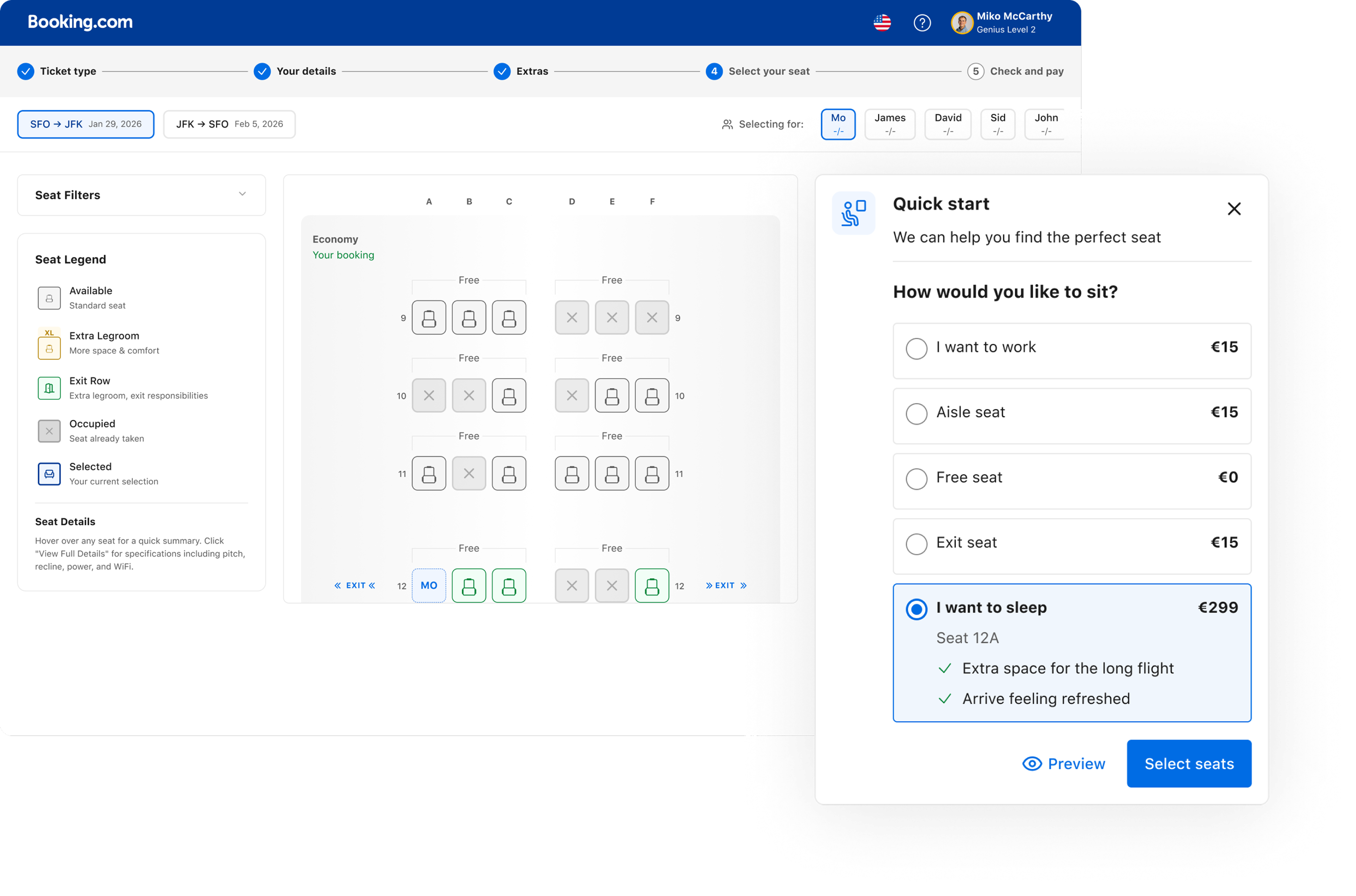
Intent-based selection
"How would you like to sit?" → Window · Aisle · Free · Exit. The recommendation justifies itself in the user's own language.
- "Max legroom, fastest exit"
- "Stretch out on long flights"
- "Arrive feeling refreshed"
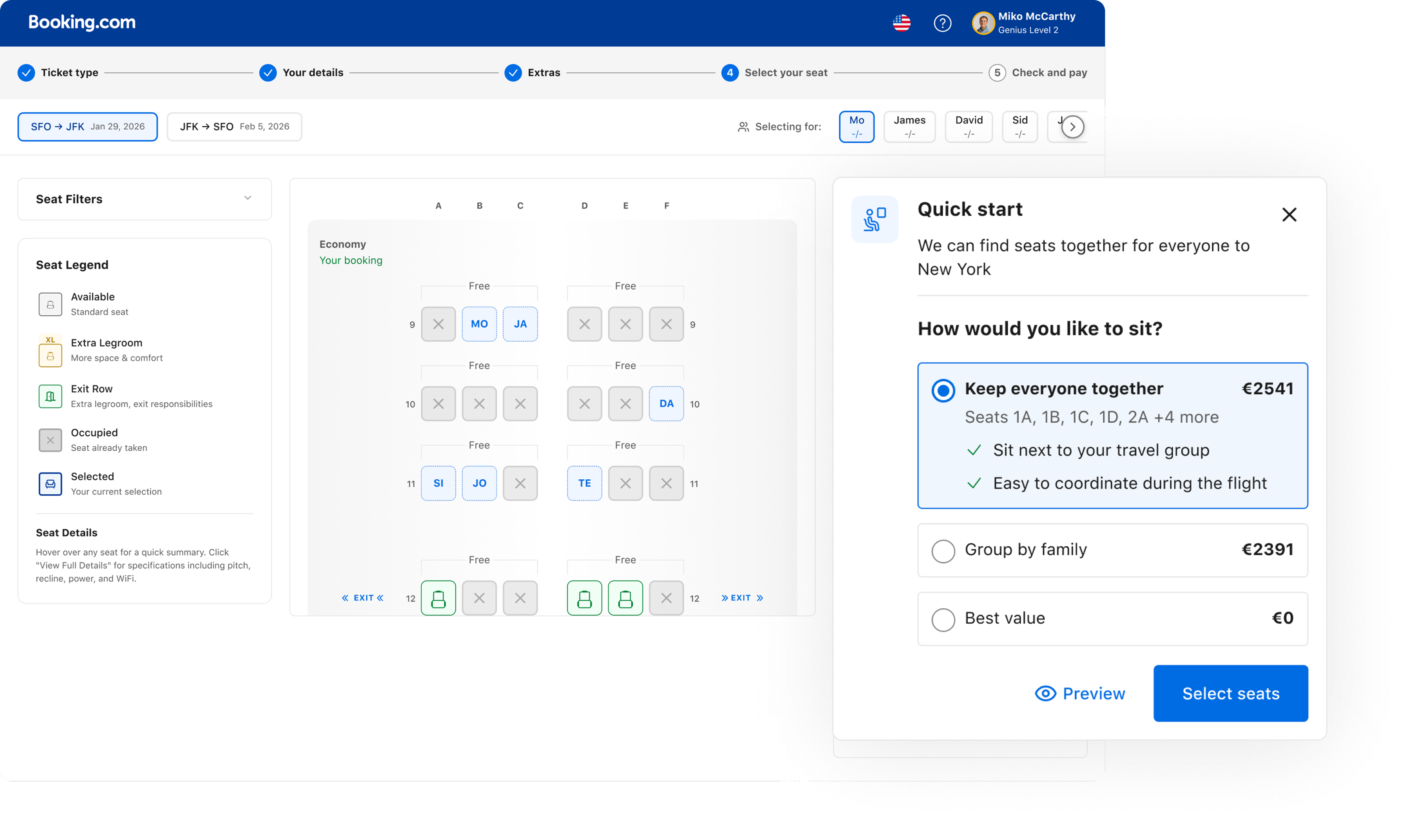
Keep everyone together
Cinema-style selection: pick once, the whole party moves. The fear of separation is the friction we remove.
- "All close together"
- "No one gets separated"
- "Easy to coordinate during the flight"
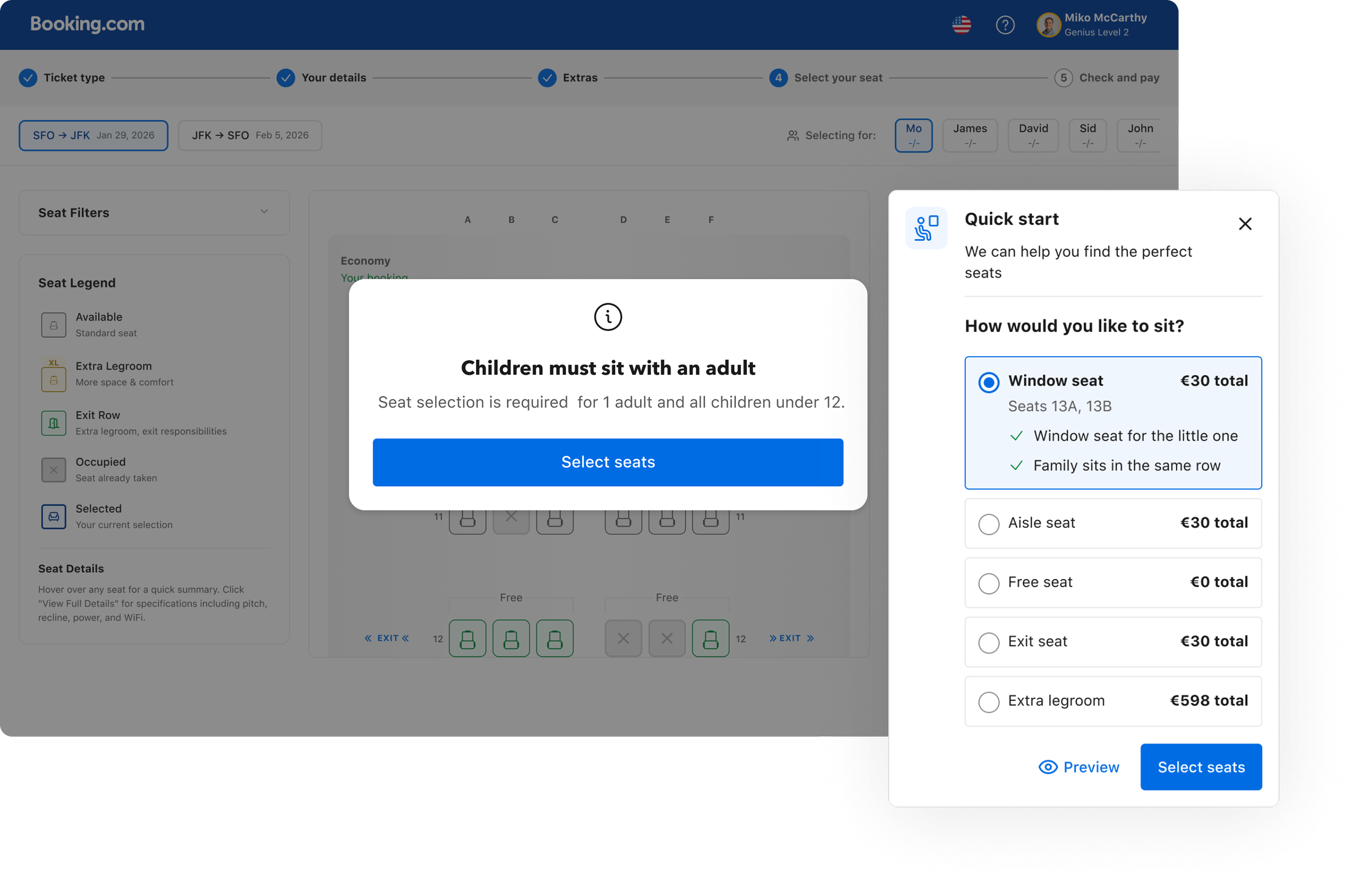
Child-adjacent by default
Seating compliance baked into the recommendation. Parents never have to ask the system for permission to sit beside their kid.
- "Seated together"
- "Child seated beside an adult"
- "Peace of mind for parents"
05 / The frame What ships, what waits, what's stopped.
A vision deck that hides its dependencies is a wishlist. The roadmap below sequences by what gates what. The three callouts beside it (Friction Reduction stopped, MDOT deferred to 2027++, three uncovered Matrix cells) are the strategic calls that made leadership trust the rest.
-
Q1 · Foundation
Architecture & Layout Changes
-
Q2 · Build on it
Detailed Seat Legend · Seat Filters · Seat Details on Hover
-
Q3 · External gate
★ RouteHappy Integration
-
Q3 · Personalisation
Seats Personalisation & contextual communication
-
Q4 · Cohort
Cohort-based Seat Selection · Assisted Selection & suggestion
-
2027++ · Future
Seat Upsell nudges · Seat availability comm · Cabin-class upgrade
Tradeoffs called by name
Friction Reduction track
We tested click-minimisation and the Expedia-style contextual side-panel approach. Side-panel framing fragmented the IA work in Pillar 1, and click-counting optimised the wrong thing. Friction wasn't the bottleneck, value clarity was. Killing it freed engineering capacity for the architectural work.
MDOT (mobile web)
Mobile-first instinct said start there. The audit said otherwise: the IA is broken on desktop too, and fixing it on mobile first would have meant throwaway code. 2027++, after H1 desktop architecture and H2 personalisation land. An explicit choice, not an oversight.
Three uncovered Matrix cells
Mobile-Web Group, iOS Group, Android Multi-City. Three scenario × platform combinations the audit didn't cover. Flagged in the H1 plan as known coverage gaps so the execution team can decide whether to fill them or accept the risk.
Success metrics
| Frame | Metric | What it means |
|---|---|---|
| North Star | Paid Seat Attach Rate | Increase paid attach & incremental ancillary revenue. The opportunity that funds the work. |
| Guardrail | Flights Bookings | Seat optimisation must not reduce upstream flight conversion. Watch ratio, not absolutes. |
| Strategic frame | CLTV & partner value | Long-term: customer lifetime value & airline-partner confidence in our seat experience. |
The outcome
Vision presented to the Flights leadership team (Product Director, GPMs, and track leads). Approved as the seat-selection direction for 2026/27. The next 18 months of seat work is being executed by another designer against the system I sequenced. Eight features from the matrix sheet have already shipped during the vision phase: Smart Group Logic, Contextual Consistency, Passenger Identity Mapping, Seats Section/Role Labeling, Orientation & Location Context, Visual Scale & Differentiation, Enhanced Filtering, Granular Seat Attributes.
The work is the architecture. The screens are downstream of it.